Career Dashboards: Track Progress, Skills, and Wins
Turn your career into a measurable project. Build a dashboard to track goals, skills, and wins—and turn performance data into compelling stories.
Why a Career Dashboard Matters
A career dashboard is a personal command center that turns scattered accomplishments, goals, and feedback into a coherent narrative. Instead of relying on memory or ad‑hoc notes, you gain a single source of truth that shows progress, highlights strengths, and exposes gaps. This clarity boosts focus, supports performance reviews, and equips you to negotiate opportunities with confidence because your impact is visible and verifiable. A well-structured dashboard brings accountability to your career strategy: you define what success looks like, track milestones, and adjust when reality diverges from expectations. It reduces decision fatigue by aligning tasks to a north-star goal, while capturing context—stakeholders, constraints, and outcomes—that makes each win credible. Over time, your dashboard becomes a living portfolio of results and learning, revealing patterns in what work energizes you, where you create outsized value, and which skills unlock your next step. With this system, momentum stops being accidental; it becomes intentional.
Designing Your Dashboard
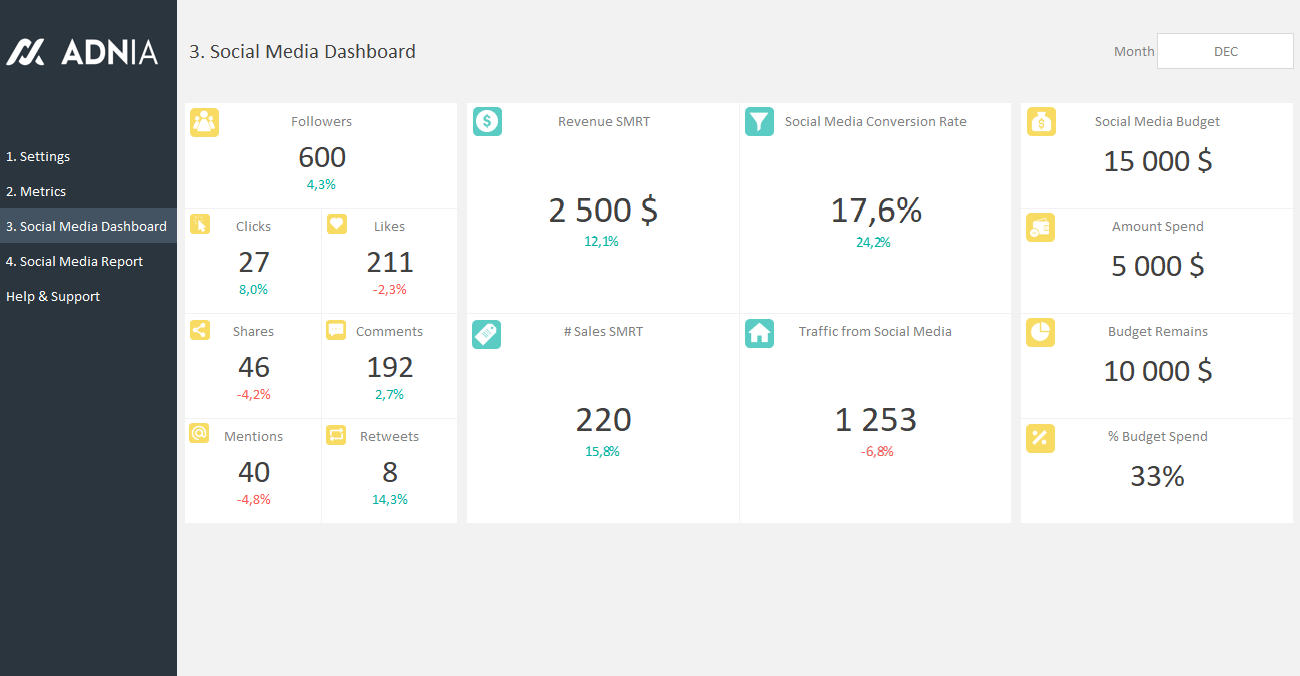
Start simple. Choose a format you will actually use—spreadsheet, notes app, or project board—and organize it with intuitive sections: Goals, Metrics, Skills Matrix, Wins Library, Learning Backlog, and Next Actions. Use consistent tags (e.g., domain, competency, stakeholder) and clear statuses (planned, in progress, completed) to filter quickly. Keep inputs lightweight: short descriptions, the problem, your actions, and measurable outcomes. Design for weekly updates, not perfection. Create a review cadence: quick check-in midweek to update metrics and a deeper reflection at the end of the week to summarize insights and decide priorities. Include a small backlog so incoming ideas do not derail current focus. Add a risk and blockers area to capture obstacles early. Finally, connect your layout to your role expectations and growth themes so every entry supports your career narrative and advances productivity.
Tracking Progress with Metrics
Good dashboards blend output (what you produce) with outcomes (what changed). Pick a handful of KPIs aligned to your goals: efficiency, quality, impact, and learning velocity. Balance leading indicators (inputs you control, like outreach, prototypes, or practice reps) with lagging indicators (impact like adoption, revenue contribution, customer happiness, or cycle time reduction). Use simple targets and trend lines to visualize whether you are on track. Break big goals into milestones that can be updated weekly, and celebrate small wins to sustain motivation. Maintain a brief decision log so you can trace why you pivoted and what you learned. When numbers slip, record root causes and one targeted experiment to test next. Keep metrics meaningful—if a number does not influence decisions, remove it. The aim is not vanity; it is clarity, consistency, and the confidence to double down on what works.
Capturing Skills and Learning
Treat your skills inventory as evidence-based, not wishful. List core competencies—technical, analytical, communication, leadership—and rate proficiency with a simple scale that you define upfront. For each skill, attach proof: projects shipped, problems solved, feedback snippets, or artifacts. Identify gaps that would create leverage and build a learning backlog: courses, books, mentors, practice challenges, or stretch assignments. Convert learning into deliverables—write a summary, teach a peer, or build a small demo—so training turns into applied capability. Track cadence (how often you practice), reps (how much), and reflection (what improved). Include soft skills such as negotiation, facilitation, and conflict resolution, because they compound your technical value. Use brief STAR-style notes (situation, task, action, result) to confirm skill depth and speed up interview prep. Over time, your dashboard becomes a skill flywheel, accelerating growth through deliberate practice and visible outcomes.
Showcasing Wins and Next Steps
A wins library turns scattered accomplishments into compelling storytelling. For each win, capture the problem, constraints, your approach, the measurable result, and a one-line takeaway. Quantify impact where possible and add context that makes the result credible. Organize wins by theme so you can assemble tailored narratives for promotions, performance reviews, or opportunities. Pair wins with a roadmap: the next few milestones, experiments, and relationships you will cultivate. Use a short retrospective at the end of each cycle: what moved the needle, what to stop, and what to start. Share highlights with mentors to invite feedback and adjust direction. Most importantly, translate wins into leverage—ask for responsibility that matches your demonstrated value. A consistent dashboard practice sharpens your personal brand, fuels productivity, and keeps your career compounding by design, not by chance.