Create a Calming Bedroom Sanctuary for Better Rest
Transform your bedroom into a serene sanctuary with soft colors, layered lighting, natural textures, and simple rituals that invite deeper sleep.
Set the Tone
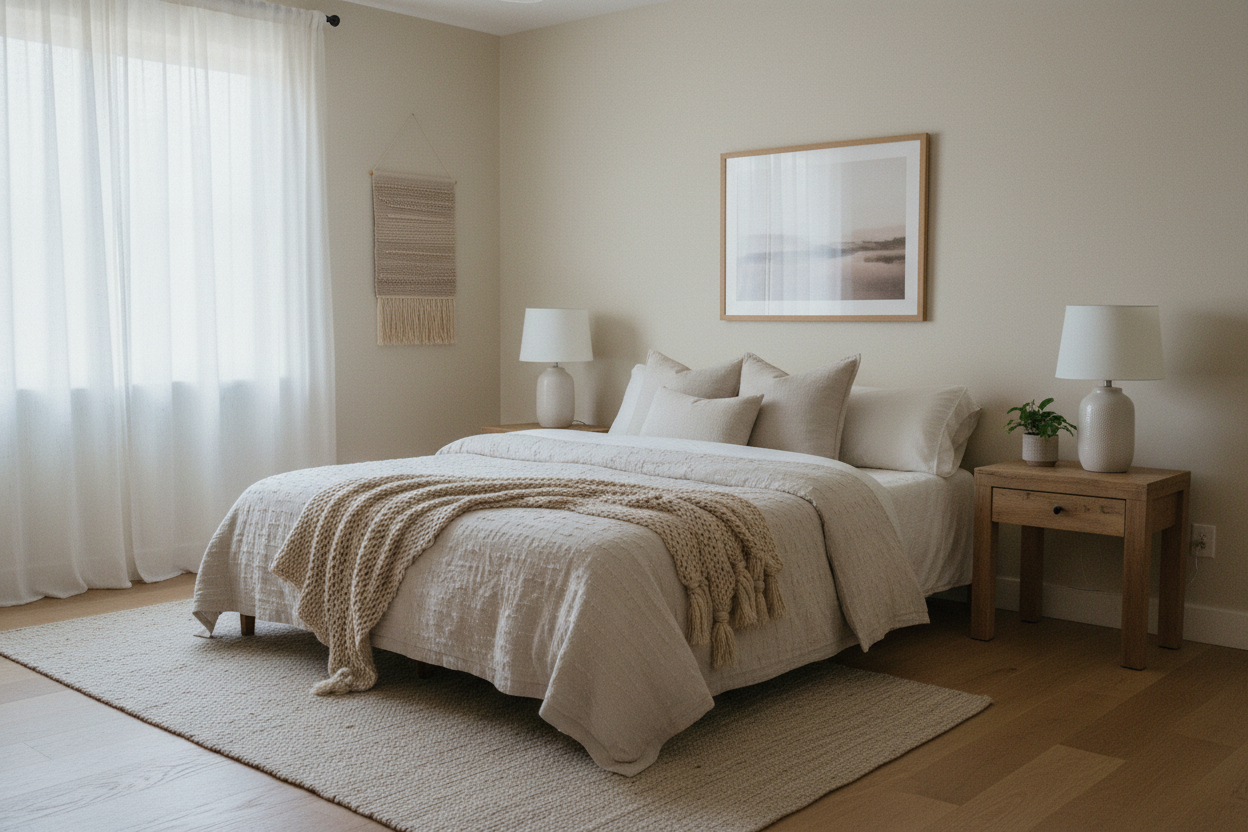
Begin by setting a clear intention: your bedroom is a sanctuary devoted to rest, not a satellite office or storage closet. Start with a thoughtful declutter. Keep only items that earn their place through beauty or function, stowing extras out of sight to create visual calm. Aim for open traffic flow around the bed so your body senses ease, not obstacles. Curate the nightstand with a gentle lamp, a single book, water, and a simple dish for jewelry or earplugs; everything else lives elsewhere. Use under-bed bins or a slim dresser to corral seasonal pieces, and place a catchall basket for tomorrow's outfit to cut morning decision fatigue. Consider a soft, neutral rug underfoot to signal comfort when you rise. Finally, define the space with one or two meaningful objects—perhaps a framed print or a small plant—avoiding busy clusters. Every choice should reinforce sleep cues that whisper quiet, safety, and simplicity the moment you step inside.
Shape With Color and Light
Color and light form the emotional backdrop of your retreat. Choose a restrained palette of soft neutrals, muted blues, greens, or warm earth tones that promote relaxation and reduce stimulation. Matte or low-sheen finishes help minimize glare, while a limited accent color adds personality without shouting. Layer your lighting thoughtfully: combine gentle ambient lighting with targeted task lamps for reading and a subtle accent source to create depth. Place warm bulbs by the bed and cooler, brighter ones near wardrobes to support function without overwhelming the senses. Install or use dimmers to ease into evening and ramp up morning energy gradually, supporting your circadian rhythm. Block intrusive street light with blackout curtains or well-lined drapes, but welcome natural daylight upon waking by opening shades promptly. Keep mirrors opposite windows to bounce soft light, not across from the bed to avoid nighttime reflections. The aim is a choreography of light that helps your body know when to power down and when to rise.
Textiles That Soothe
Touch is a direct line to the nervous system, so invest in textiles that feel comforting against the skin. Choose breathable materials like cotton, linen, bamboo-derived fibers, or lyocell to manage heat and moisture across seasons. Mix textures—crisp percale sheets for coolness, a velvety quilt for weight, a knit throw for tactile grounding—to create layers you can adjust easily. Seek hypoallergenic fills for pillows and duvets if sensitivities are a concern, and match pillow loft to your sleep position to support neck alignment. A mattress topper can fine-tune firmness without a full replacement, while a cushioned rug quiets footsteps and adds warmth. Prioritize temperature regulation by keeping spare layers within arm's reach, avoiding the midnight scramble. Launder sheets regularly and rotate sets to preserve fibers and freshness. Choose curtains with a soft hand to dampen noise and filter light. When textiles quietly support comfort—without scratchiness, overheating, or clutter—they invite the body to exhale and settle into truly restorative rest.
Sound, Scent, and Air
Your senses crave gentle, predictable signals at bedtime. Introduce aromatherapy with light notes like lavender, chamomile, or cedarwood using a small diffuser or linen spray, and keep scents subtle rather than overwhelming. Balance air quality by opening windows when possible to refresh the room and reduce stuffiness; if outdoor noise or allergens interfere, a basic purifier can help. Rugs, upholstered headboards, and heavy drapes act as soft sound baffles, while door sweeps and weatherstripping curb hallway or street noise. Try white noise or a soft fan to create a consistent auditory backdrop that masks sudden disruptions. Keep the room tidy to reduce dust, and consider a low-maintenance plant where appropriate for a touch of life and visual calm. Monitor humidity by feel—overly dry air irritates, while excessive moisture feels clammy—and adjust with a small humidifier or dehumidifier as needed. When scent, sound, and air align in quiet harmony, your mind learns that bedtime equals safety and ease.
Rituals and Maintenance
A calming room works best when paired with supportive rituals. Establish a screen-free wind-down, dimming lights and swapping stimulating tasks for gentle cues: a warm shower, light stretches, slow breathing, or a few pages of fiction. Keep a notepad by the bed to offload to-dos, turning racing thoughts into a simple plan for tomorrow. Aim for a consistent bedtime and wake window, even on weekends, to fortify sleep hygiene. Build a five-minute nightly reset—fold the throw, clear the nightstand, place a glass of water—to prevent clutter from creeping back. Set tech boundaries by charging devices outside the bedroom or using do-not-disturb modes so notifications cannot pierce the calm. Rotate bedding and vacuum rugs routinely to maintain freshness. Use small micro-rituals like lighting a candle while you read, then extinguishing it as your final cue. Over time, these habits stack into a reliable groove that shepherds you from wakefulness to deep, replenishing rest.