Elevate Your Home Cooking with Simple, Fresh Ingredients
Transform everyday meals with peak-season produce, smart pantry staples, and simple techniques that unlock bright flavor, texture, and joy.
Savor Seasonal Simplicity — Great home cooking begins with a seasonal, fresh mindset. When you choose ingredients at their peak, flavors shine and effort becomes optional. A ripe tomato needs only a pinch of sea salt and a drizzle of olive oil to taste extraordinary. Build your meals around whole foods that already deliver character: juicy citrus, crisp greens, earthy roots, and tender herbs. Keep a small, reliable pantry to support them, not overshadow them. Stock essentials like extra-virgin olive oil, flaky salt, pepper, vinegar, whole grains, legumes, nuts, and a few warming spices. With these on hand, a handful of market treasures turns into dinner. Embrace minimalism on the plate and let texture do some lifting: crunchy seeds over creamy beans, silky yogurt against roasted vegetables, toasted breadcrumbs on a soft omelet. The result is vibrant, approachable cooking that fits a relaxed lifestyle, reduces decision fatigue, and rewards you with honest, memorable flavor every single day.
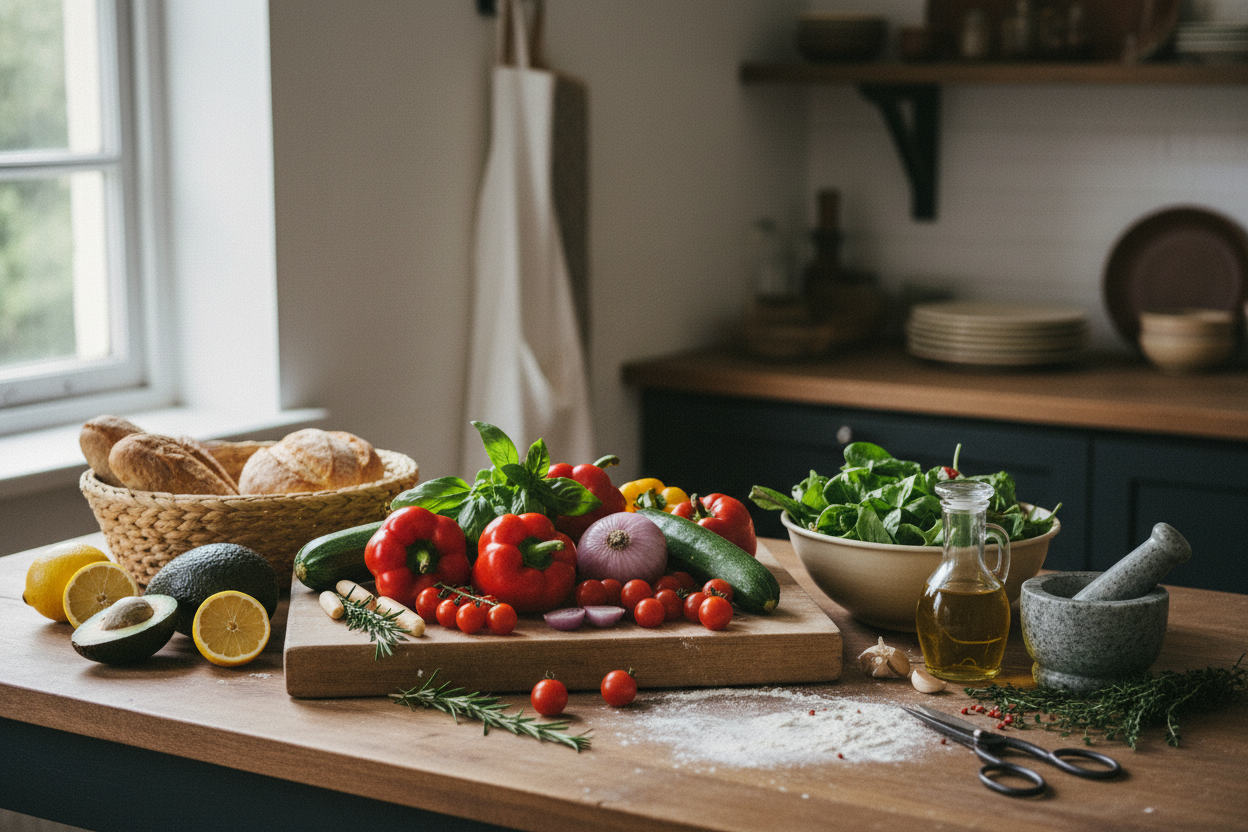
Shop and Store Like a Pro — Smart cooks shop with their senses. Look for vibrant color, firm texture, and a clean, fragrant aroma. Choose greens with crisp stems, fruit that feels heavy for its size, and herbs that smell bright. Bring a focused list built around simple meal ideas so impulse buys support, rather than complicate, your plan. At home, store to protect freshness: treat tender herbs like flowers in a jar of water, spin and tuck leafy greens into a container lined with a towel, keep tomatoes on the counter, and place onions and garlic in a cool, dry spot. Layer berries in a single layer to prevent bruising. Pre-portion proteins and freeze extras to reduce waste. Use clear bins so ingredients stay visible, and keep a small bowl front and center for items that need to be used soon. Thoughtful storage turns markets into inspiration rather than clutter and helps you cook confidently all week.
Build Flavor with Balance — Delicious food relies on balance. Think in pillars: salt, acid, fat, and heat. Season early and often with layered pinches of salt to draw out natural juices. Add acid with lemon, vinegar, or yogurt to brighten and lift. Use fat to carry aroma and create a satisfying mouthfeel; a spoon of olive oil, a pat of butter, or a nutty tahini swirl can transform a dish. Control heat to develop character: a quick sear for caramelization, a gentle simmer for tenderness. Create depth with aromatics like garlic, shallot, scallion, and ginger; bloom spices briefly in oil to coax out their perfume. Finish with contrast for excitement: a shower of fresh herbs, toasted seeds, or citrus zest right before serving. Taste as you go, adjust in small steps, and note what changes. With this simple framework, modest ingredients become layered, nuanced, and endlessly satisfying without complicated recipes.
Master Quick, Fresh Techniques — Technique turns simplicity into something special. High-heat roasting concentrates sweetness in carrots, tomatoes, and squash. A fast sauté yields crisp-tender snap peas or zucchini with golden edges. Gentle steaming keeps fish delicate and broccoli vivid, while poaching preserves moisture in chicken or eggs. Learn to blanch and shock greens to set their color and tame bitterness, then toss with olive oil, lemon, and chili flakes. Build a fast pan sauce by deglazing with stock or vinegar, then whisking in a touch of butter, tahini, or miso for body. Embrace one-pan and sheet-pan meals: roast vegetables beside chickpeas, then finish with herbs and a tangy yogurt drizzle. Keep knives sharp, preheat pans properly, and avoid crowding to maintain sear. Rest proteins briefly so juices settle. These small, repeatable moves anchor a relaxed routine, turning a few fresh ingredients into elegant, everyday plates in minutes.
Swap Smart, Keep It Simple — Flexible substitutions keep cooking joyful, budget-friendly, and inclusive. Swap beans or lentils for ground meat in tacos or ragù; use cauliflower or grated root vegetables instead of heavy starches when you want lightness. Sub in zucchini ribbons or whole-grain pasta to suit your mood. Choose Greek yogurt in place of mayo or sour cream for tang and protein, or blend soaked cashews for a silky dairy-free base. Brighten dishes with citrus and herbs when you want to cut back on salt. Keep a few modular sauces on rotation—pesto, chimichurri, tahini-lemon, or a simple vinaigrette—so any grain bowl, roasted tray, or salad gains instant personality. Roast nuts for crunch, crumble feta for creaminess, or add olives for briny pop. By thinking in textures and functions rather than rigid recipes, you can respond to seasons, preferences, and pantry realities without sacrificing flavor, nutrition, or ease.
Plate with Purpose, Eat with Joy — Food tastes better when it looks and feels inviting. Aim for color, contrast, and height: nestle roasted vegetables over grains, crown with a tangle of herbs, then sprinkle seeds for sparkle. Use a swipe of yogurt or hummus as a creamy base. Garnish generously with fresh herbs, citrus zest, or a quick pickle to wake up the palate. Create a gentle ritual around the table: set a cloth, pour water into real glasses, add a candle or a sprig of rosemary. Slow down, inhale the aroma, take the first bite mindfully, and notice texture and temperature. Invite others to participate—someone stirs the pot, someone plates, someone chooses music—so the meal becomes connection, not chore. Keep portions relaxed and allow space for hunger and satisfaction to guide you. When cooking meets care and presentation, simple ingredients deliver restaurant-worthy pleasure at home.
Plan, Prep, and Waste Less — A calm kitchen begins with light planning. Sketch a few anchor meals, then let leftovers flow into bowls, wraps, or soups. Dedicate a short window to prep: wash and dry greens, cook a pot of grains, roast a tray of mixed vegetables, and mix a versatile dressing. Store components in clear containers so choices are visible. Practice first in, first out to keep ingredients moving. Transform scraps into value: simmer peels and trimmings into vegetable stock, turn stale bread into crunchy breadcrumbs, and chop herb stems into salsas. Freeze extra portions in flat bags for quick thawing and label with contents for easy rotation. Shop smaller, more often when possible to stay close to what is fresh. These simple rhythms reduce waste, save money, and free headspace. With a few building blocks ready, you can improvise nourishing, fresh meals even on busy days, keeping cooking joyful and sustainable.