Extending Motor Lifespan: Maintenance Habits That Matter
Keep motors running longer with simple, consistent habits: correct lubrication, clean cooling, aligned drives, smart monitoring, and safe storage.
Know the Load and Duty Cycle. Extending motor lifespan begins with understanding the load profile the machine actually sees. A motor that is routinely underloaded may never reach efficient operating temperature, allowing moisture to condense internally, while a chronically overloaded motor runs hot, rapidly aging insulation and bearings. Map the duty cycle — steady state, variable, or cyclic — and note start–stop frequency, as every start stresses windings and couplings. Align the application's torque curve with the motor's nameplate and service factor, and avoid the temptation to oversize without cause; appropriately sized motors operate closer to peak efficiency and handle transients better. Where feasible, use soft starters or variable frequency drives to reduce inrush and mechanical shock, then set reasonable acceleration and deceleration ramps. Finally, coach operators on load transients, warm-up practices, and avoiding abrupt stalls. When selection, controls, and behavior match the real job, the motor experiences fewer extremes, fewer trips, and a much longer, calmer life.
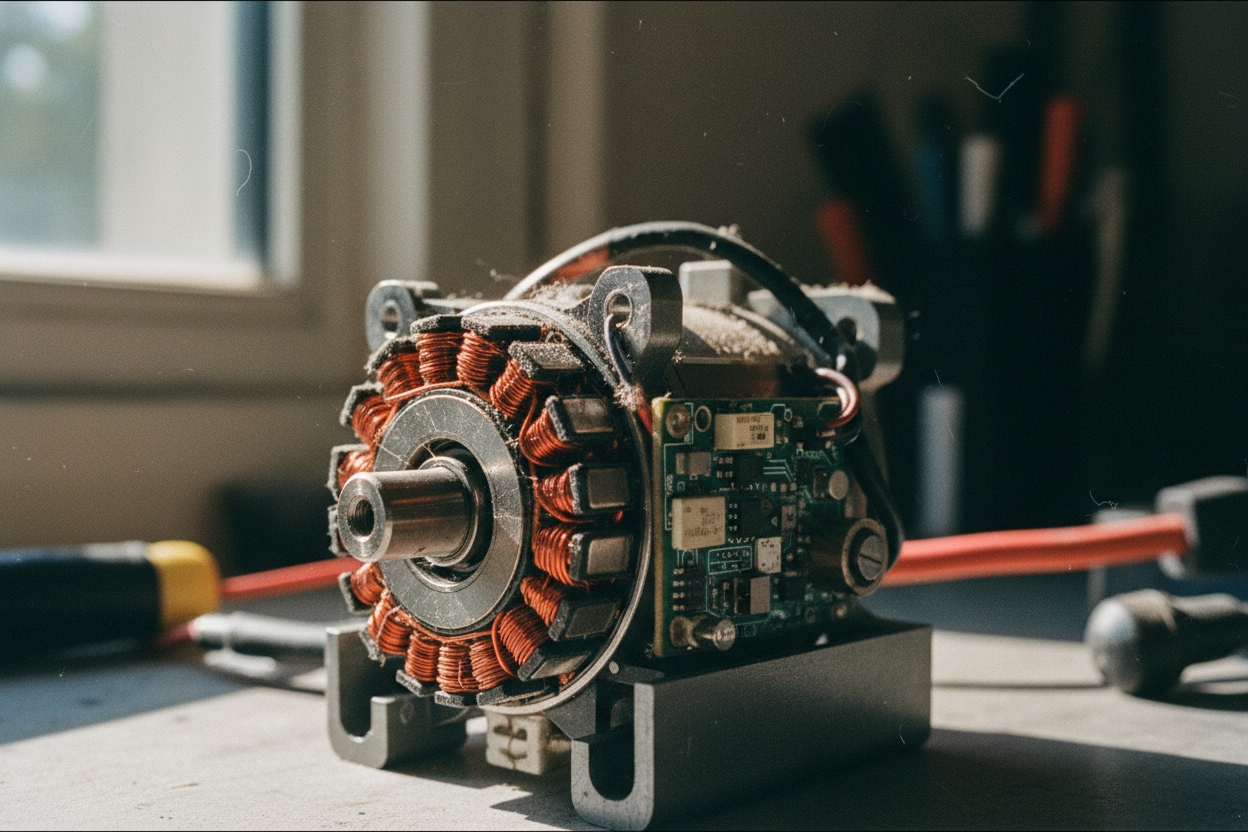
Lubrication Done Right. Bearings are the heart of rotating reliability, and lubrication is their lifeblood. Choose the correct grease or oil grade based on speed, load, and temperature, and verify thickener compatibility before mixing products. Follow manufacturer relube intervals, but validate with actual conditions—dirty, hot, or wet environments demand more frequent attention. Prevent overgreasing, which can blow seals and churn grease, generating heat; use measured amounts, purge paths, and properly sized fittings. For oil systems, keep levels stable, control foaming, and inspect sight glasses for aeration or discoloration. Practice clean handling: sealed containers, lint-free tools, and labeled guns to avoid cross-contamination. Consider condition monitoring with oil analysis or ultrasound to detect lubrication starvation, overfill, and early bearing wear. Do not neglect sealed bearings—they still benefit from aligned shafts, good heat management, and clean surroundings. Treat lubrication as a precise process, not a guess, and bearing life will track accordingly.
Perfect Alignment and Balance. Misalignment and imbalance multiply loads on bearings, couplings, and shafts, accelerating wear. Start with a stable foundation and flat baseplate, then eliminate soft foot with proper shimming. Align using dial indicators or laser tools when available; measure both angular and parallel offset in vertical and horizontal planes. For belt drives, set correct belt tension and verify sheave condition and coplanarity. Choose couplings that fit the torque, misalignment tolerance, and environment, and torque fasteners to spec. Address runout, bent shafts, or worn hubs before commissioning. If vibration persists, evaluate rotor balance and potential resonance with basic vibration analysis; even small imbalances grow destructive near structural natural frequencies. Maintain clear mounting practices: clean mating surfaces, anti-seize where appropriate, locked hardware, and marked references for future checks. Correct alignment and balance do more than protect bearings—they reduce power consumption, noise, and heat, creating operating margins that pay back every hour the motor turns.
Clean, Dry, and Protected. Contamination is a quiet killer of motors. Keep the exterior free of dust, oil mist, and debris so cooling paths stay open, and manage the interior by controlling ingress. Choose the right enclosure for the environment—open, TEFC, or higher IP ratings—and maintain gaskets, seals, and labyrinths. Install desiccant breathers or drains where humidity threatens condensation, and use proper cable glands, conduit seals, and drip loops to block water travel. Fit filters on intake air, and replace them on schedule to avoid starved airflow. In washdown zones, protect vents, avoid direct high-pressure spray on bearing seals, and let equipment dry before restart. For dusty processes, manage housekeeping and capture sources at the process, not the motor. During storage, plug openings, elevate off floors, rotate shafts periodically, and maintain insulation resistance with controlled humidity. A clean, dry motor lives longer, runs cooler, and better preserves its dielectric and mechanical integrity.
Master Heat and Ventilation. Heat is the enemy of insulation and lubricants, so managing temperature is non-negotiable. Verify unobstructed ventilation, functional cooling fans, and clean fins to maximize convection. Monitor ambient temperature, nearby process heat, and enclosure effects that trap warmth; if necessary, add ducting, baffles, or enhanced airflow. Respect temperature rise and insulation class limits, and validate with IR thermography or built-in sensors. Frequent starts, high inertia loads, and long acceleration ramps generate extra heat—tune ramp rates and evaluate inertia matching to keep temperatures in check. For VFD applications, lower speeds reduce fan effectiveness on fan-cooled motors, so consider auxiliary blowers or derating. Track bearing temperature as closely as winding temperature; hot bearings degrade grease and reduce life quickly. Build heat awareness into daily rounds: if a machine feels unusually warm, it is signaling a load, airflow, or lubrication problem. Cooler motors last longer—by a wide margin.
Protect the Electrical Heart. A healthy electrical system preserves windings and bearings alike. Keep voltage within tolerance and phases balanced to avoid excess current and localized heating. Control harmonics from non-linear loads with proper filtering, and size conductors to minimize voltage drop. When using variable frequency drives, mitigate dV/dt stress and common-mode currents that can cause shaft voltage and electrical bearing damage; apply insulated bearings, grounding brushes, or output filters as needed. Maintain tight, clean connections, correct torque, and sound grounding to limit hot spots and tracking. Periodically test insulation resistance with a megohmmeter and trend results, supplementing with polarization index where appropriate. Inspect terminal boxes for moisture, dust, and loose strands. Protect against surges and transients with coordinated devices, and review overload settings for realistic protection, not nuisance trips. Electrical health is not abstract—it directly governs temperature, vibration, and the silent aging of insulation systems.
Document, Schedule, Improve. Reliability grows from disciplined habits. Build a maintenance plan that blends time-based tasks with condition-based checks like vibration, ultrasound, thermography, and oil analysis. Use concise checklists, capture readings, and trend KPIs such as temperature, noise, and energy draw to catch drift before failure. Standardize work procedures, lubrication routes, and spare parts so replacements match originals in fit and performance. After any fault, perform root cause analysis, correct the cause, and update standards so the problem does not repeat. Train operators to notice early warnings—hot smells, tonal changes, or higher current—and to report them promptly. Keep clean records tied to asset IDs, including alignment targets, bolt torques, and lubrication volumes. Reliability is iterative: plan, execute, learn, and refine. With steady documentation and feedback, small improvements compound into dramatically longer motor life and lower total cost.