Gearing Up: How Gear Ratios Transform Motor Performance
From bicycles to EVs, gear ratios shape torque, speed, efficiency, and drivability. Learn how sizing, stages, and trade-offs transform motor performance.
Ratio Basics
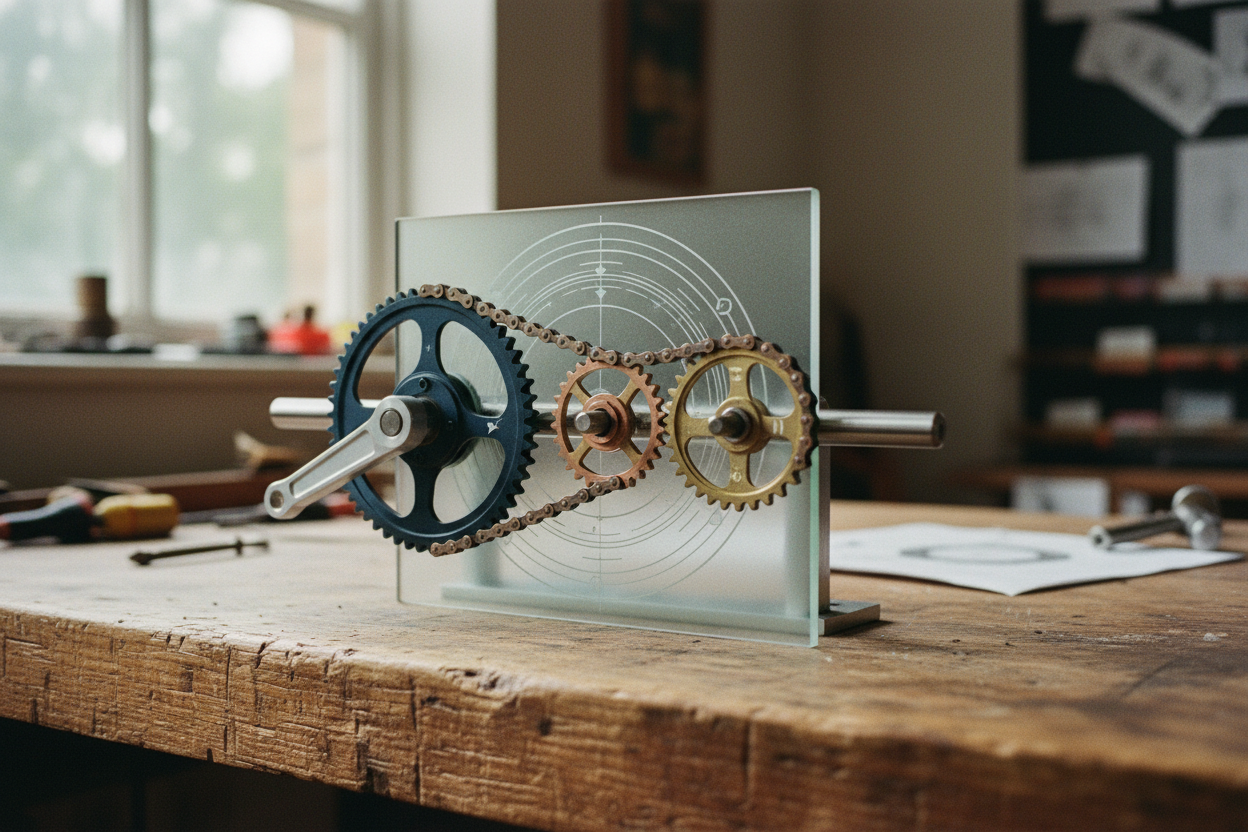
Understanding gear ratios is foundational to unlocking better motor performance. A gear ratio expresses how many turns the input gear makes for each turn of the output gear. When the ratio is greater than one, you have a reduction, which multiplies torque and reduces speed; when it is less than one, you have a step-up, which increases speed and reduces torque. Because power is the product of torque and rotational speed, and because real systems experience losses, gear ratios primarily trade torque for speed or vice versa while introducing modest inefficiencies. The right mechanical advantage lets a compact motor move heavy loads smoothly, while an unsuitable ratio forces the motor to work outside its comfort zone, causing heat, noise, or sluggish response. Whether in electric drives, industrial machines, or mobile platforms, the final drive ratio translates the motor's natural characteristics into usable output. By shaping where the motor operates along its performance curve, gear ratios directly influence acceleration, sustained load capacity, and overall efficiency.
Acceleration and Load
Gear ratios determine how decisively a motor launches and how confidently it handles heavy loads. A reduction ratio amplifies torque at the output shaft, enabling stronger starts, easier hill climbs, and reliable overcoming of static friction. Critically, a proper ratio also reduces the load's reflected inertia at the motor by roughly the square of the ratio, making it far easier to accelerate mechanisms such as wheels, conveyors, or robot joints without requiring oversized motors. This improves responsiveness, trims peak current in electric systems, and helps controllers avoid stress near stall conditions. Choose too little reduction and the motor may bog down, draw excessive current, or overheat during starts. Choose too much and you sacrifice top speed, encounter greater frictional losses, or risk sluggish dynamics. Applications like e-bikes, autonomous carts, and packaging equipment benefit when the ratio is tuned for the expected duty cycle, load spectrum, and desired acceleration profile, balancing quick starts with sustainable cruising.
Efficiency Matters
While gear ratios offer mechanical advantage, they also introduce losses through gear mesh friction, bearing drag, and lubricant shear. Design choices strongly affect efficiency. Spur gears are simple and efficient but can be noisier; helical gears run quieter and share load smoothly, yet impose axial forces that need proper bearing support. Planetary gearsets pack high ratios into compact spaces with excellent load distribution, though each mesh still adds incremental loss. Good lubrication, correct viscosity, and precise alignment minimize friction and heat, preserving both motor and gearbox life. Too many stages or excessively high reductions can push the system into a loss-dominated regime where gains in torque are overshadowed by wasted energy. The art is to select a ratio that places the motor near its efficiency sweet spot at the intended operating speed and load, then support that ratio with high-quality components, tight tolerances, and adequate cooling, ensuring power reaches the output rather than being dissipated as heat and noise.
Control and Drivability
The best gear ratio works hand in hand with intelligent control. Controllers shape motor behavior via current limits, acceleration ramps, and speed or torque loops, but the ratio sets the stage by defining how those commands translate into motion. A well-chosen ratio places the motor near its peak efficiency and comfortable torque band for cruise, while offering headroom for bursts of acceleration. In electric systems, features like field weakening can extend top speed, but require a supportive ratio to avoid excessive current and heat. In robotics, the ratio influences backdrivability, precision, and settling time, affecting how a joint responds to small commands or external disturbances. Some applications benefit from multi-speed or planetary arrangements to broaden the usable range, while many thrive with a single optimized reduction. Tuning both the ratio and controller yields predictable starts, smooth low-speed control, stable holding torque, and agreeable drivability, ensuring the machine feels responsive without being twitchy or power-hungry.
Durability and Noise
Choosing a gear ratio is not only about output numbers; it also shapes durability and NVH (noise, vibration, harshness). Higher surface speeds elevate lubricant shear and bearing loads, while aggressive reductions can concentrate stress on gear teeth. Proper tooth geometry, surface finish, and material selection combat wear, pitting, and micro-scuffing. Helical gears typically reduce noise and distribute load smoothly but create axial thrust, demanding robust bearings and stiff housings. Spur gears are simpler and can be quieter at moderate speeds with good alignment. Backlash must be balanced: too tight increases friction and heat; too loose harms precision and can rattle under reversing loads. Clean, correctly specified lubrication protects gear meshes and removes heat; contamination accelerates wear and raises vibration. Lastly, consider thermal management for both motor and gearbox, as heat shortens lubricant life and undermines magnet and insulation health. With sound alignment, sealing, and maintenance, the chosen ratio supports long, quiet, and reliable service.
Smart Selection
Selecting a winning gear ratio follows a disciplined process. First, define performance targets: required output torque, top speed, acceleration, and duty cycle. Estimate load torque and inertia at the output, then compute an initial ratio r that meets top speed: r ≈ motor max speed divided by required output speed. Check that motor continuous torque times r exceeds required output torque with margin, and confirm starting torque needs. Evaluate reflected inertia at the motor: J_ref ≈ J_load ÷ r²; ensure it aligns with desired responsiveness and controller capability. Consider available gear stages and their efficiency, packaging, and noise limits, then pick the fewest stages that meet goals. Verify thermal performance over realistic cycles, and adjust r or cooling if temperatures creep upward. Example: a conveyor needing moderate acceleration may thrive with a modest reduction and a planetary stage for compactness, while a high-speed spindle prefers a step-up with low backlash and premium bearings. Validate with tests, refine, and lock in a ratio that truly transforms performance.