Pollinator-Friendly Plants Your Garden Will Love
Transform your yard into a buzzing haven with vibrant, nectar-rich plants that feed bees, butterflies, and hummingbirds while boosting blooms and harvests.
Build a Pollinator Habitat
Think of your home garden as a living invitation for pollinators by offering food, shelter, and water from edge to edge. Start with sun, since most flowering plants that feed bees, butterflies, and hummingbirds thrive in at least six hours of light. Layer structure to create a safe haven: groundcovers, herbaceous perennials, small shrubs, and a few flowering trees give foragers and nesting wildlife places to rest and hide. Provide a shallow water source with pebbles so insects can land safely, and refresh it often. Choose untreated plants and skip systemic pesticides that infiltrate nectar and pollen. If pests appear, try hand-picking, strong water sprays, or organic controls targeted to the problem. A mix of native plants and well-behaved ornamentals meets diverse needs and supports local ecosystems. Keep some open soil or a tidy brush pile for ground-nesting bees and overwintering insects. With thoughtful design, your garden becomes a resilient, beautiful space where biodiversity thrives naturally alongside your favorite outdoor routines.
Season-Long Bloom Plan
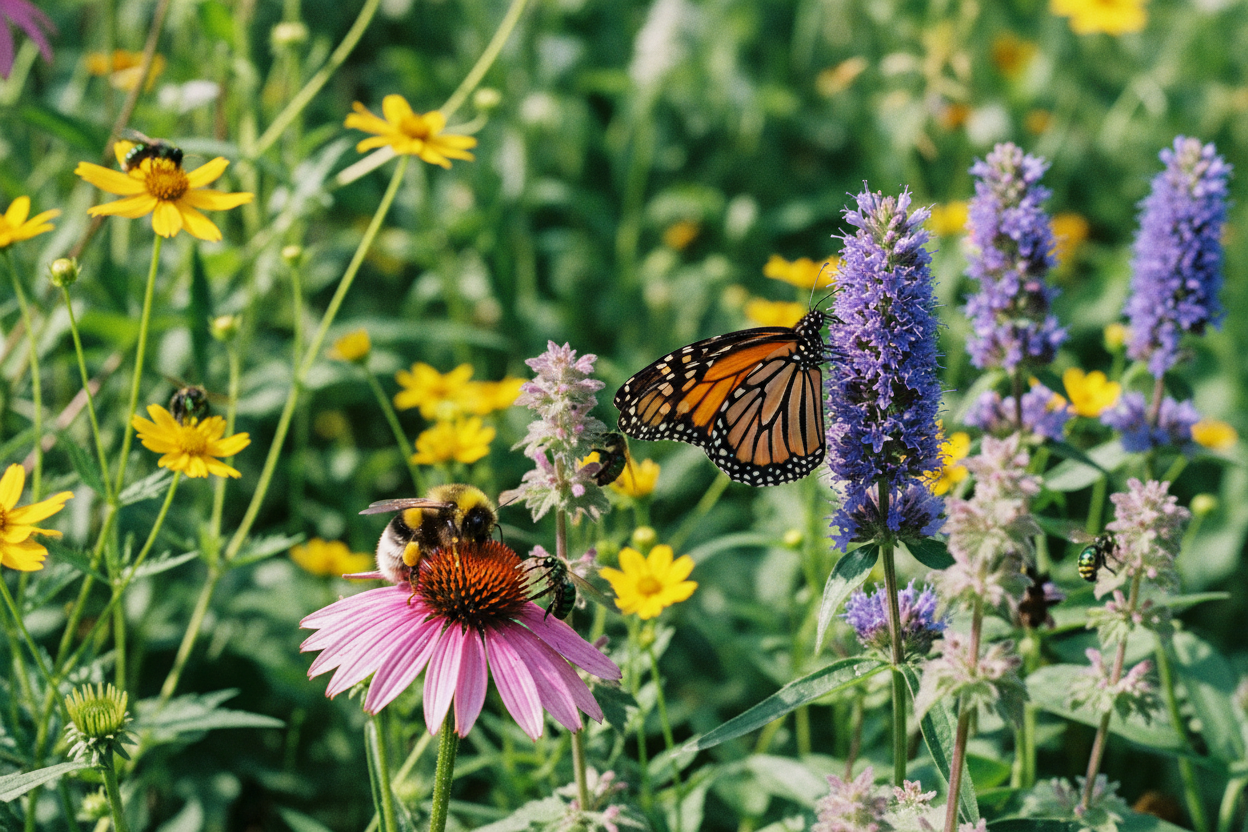
A truly pollinator-friendly space offers continuous bloom from early spring through late fall, so something is always on the menu. In early spring, lean on willow, serviceberry, crocus, and hellebore to jump-start nectar and pollen. As days warm, bring in salvia, catmint, thyme, phlox, and lupine to bridge the season. Midseason color from bee balm, coneflower, black-eyed Susan, lavender, and coreopsis supports the busiest foraging window. Late-season resources are crucial; plant goldenrod, asters, sedum, joe-pye weed, and toad lily to help pollinators build reserves before cold weather. Stagger bloom times within each bed and repeat key performers so clusters are easy for insects to spot. Include varied flower shapes—spikes, umbels, and open daisies—so different tongue lengths and feeding behaviors can access nectar. Keep notes on what blooms when, then patch any gaps next planting season. This rotating buffet keeps your home and garden lively and buzzing day after day.
Bee Favorites and Natives
Bees appreciate simple, single flowers with exposed centers, where pollen is abundant and easy to collect. Prioritize native plants that coevolved with local bees: coneflower, goldenrod, penstemon, mountain mint, wild bergamot, blazing star, and blue false indigo. Add herb allies like borage, oregano, rosemary, and thyme; when allowed to flower, they become mini bee festivals. Plant in drifts of three or more so color blocks are visible from a distance, and avoid heavily double-flowered varieties that can hide nectar. Leave some bare, well-drained soil for mining bees, and offer dead stems or bee hotels for cavity nesters, cleaning or replacing them as needed to prevent disease buildup. Bees also benefit from pesticide-free management; even organic sprays can disrupt navigation and foraging, so target carefully and apply during cool, still times when bees are less active. With these tweaks, your beds will vibrate with safe, efficient bee traffic all season.
Butterflies and Host Plants
Butterflies need nectar for adults and specific host plants for caterpillars, so a balanced garden nurtures both life stages. For nectar, choose butterfly bush alternatives such as buttonbush, joe-pye weed, verbena, zinnia, cosmos, phlox, and lantana in regions where it is non-invasive. Support caterpillars with milkweed for monarchs, parsley, dill, and fennel for swallowtails, violets for fritillaries, and spicebush or sassafras for spicebush swallowtails. Site these hosts in sunny, sheltered spots where leaves stay fresh. Add flat sun-warmed stones for basking and a shallow puddling tray of sand and water for minerals. Avoid cutting back every spent bloom; seed heads feed other wildlife and sometimes shield chrysalides. Reduce broad-spectrum treatments that eliminate helpful predators and disturb the delicate dance between caterpillars and food plants. With intentional plant pairings and gentle care, your garden becomes a cradle for transformation, from tiny egg to dazzling, winged pollinator.
Hummingbirds and Night Pollinators
Hummingbirds flock to tubular, nectar-rich blooms, especially in bold reds and oranges. Plant cardinal flower, bee balm, salvia, trumpet honeysuckle (non-invasive types), agastache, and columbine to match their long bills and high energy needs. Stagger heights so birds can feed at multiple levels, and allow a few airy perches nearby for rest between sips. Do not forget twilight visitors: many moths prefer pale, night-fragrant flowers such as evening primrose, nicotiana, four o'clocks, and moonflower, which open or intensify scent at dusk. Reduce outdoor lighting or use warm, shielded fixtures so nocturnal pollinators navigate without disruption. Skip insecticides during evening hours when moths are active, and provide a discreet water dish for quick rinses in dry spells. This day-to-night plant palette turns borders, trellises, and patio edges into a round-the-clock fueling station, where iridescent wings and soft night flutter weave an ever-changing, garden theater of motion.
Design, Care, and Containers
Pollinator-forward design shines when beauty meets function. Map sun patterns, observe wind, and match plants to your soil's drainage and texture. Group by bloom time and color, placing warm hues up front for quick recognition and cooler tones to deepen perspective. Use organic mulch to conserve moisture, but leave small bare pockets for ground nesters. Water deeply and less often to promote resilient roots, and let a few stems stand through winter to protect overwintering insects; remove them gently in spring once temperatures rise. In small spaces, build a sky-high buffet with containers, window boxes, and railing planters. Mix zinnia, calendula, alyssum, nasturtium, basil, and thyme, refreshing with successive sowings for steady color and nectar. Place pots in bright clusters to mimic drifts, and rotate as needed to chase the sun. Keep everything pesticide-free, prioritize healthy soil, and edit generously. With thoughtful upkeep, your home landscape hums with life and returns the favor in fragrance, color, and calm.