Troubleshooting Common Motor Failures Like a Pro
Master pro-level diagnosis of motor overheating, bearing noise, voltage imbalance, and winding faults with step-by-step tests, tools, and safety tips.
Start With Clear Symptoms — Professional troubleshooting of motors begins with disciplined observation and structured testing. List obvious symptoms: won't start, trips protection, runs hot, makes unusual noise, vibrates, delivers low torque, or drifts in speed. Use your senses carefully: smell for burnt insulation, listen for bearing rumble or contactor chatter, and scan for discoloration, oil sling, cracked fan blades, loose conduit, or dust mats clogging vents. Confirm basics: compare supply to nameplate, understand the load profile (constant torque vs variable torque), and verify duty cycle expectations. Apply proper lockout and verify test instruments before touching terminals. Build a hypothesis tree separating electrical, mechanical, control, and load causes. Avoid shotgun part swaps; instead, record the sequence of events and any intermittent behavior. Quick triage saves time: rotate the shaft by hand to feel binding, check insulation resistance to ground, and measure terminal voltage under attempt-to-start. Each reading narrows the fault path and keeps you methodical, fast, and safe.
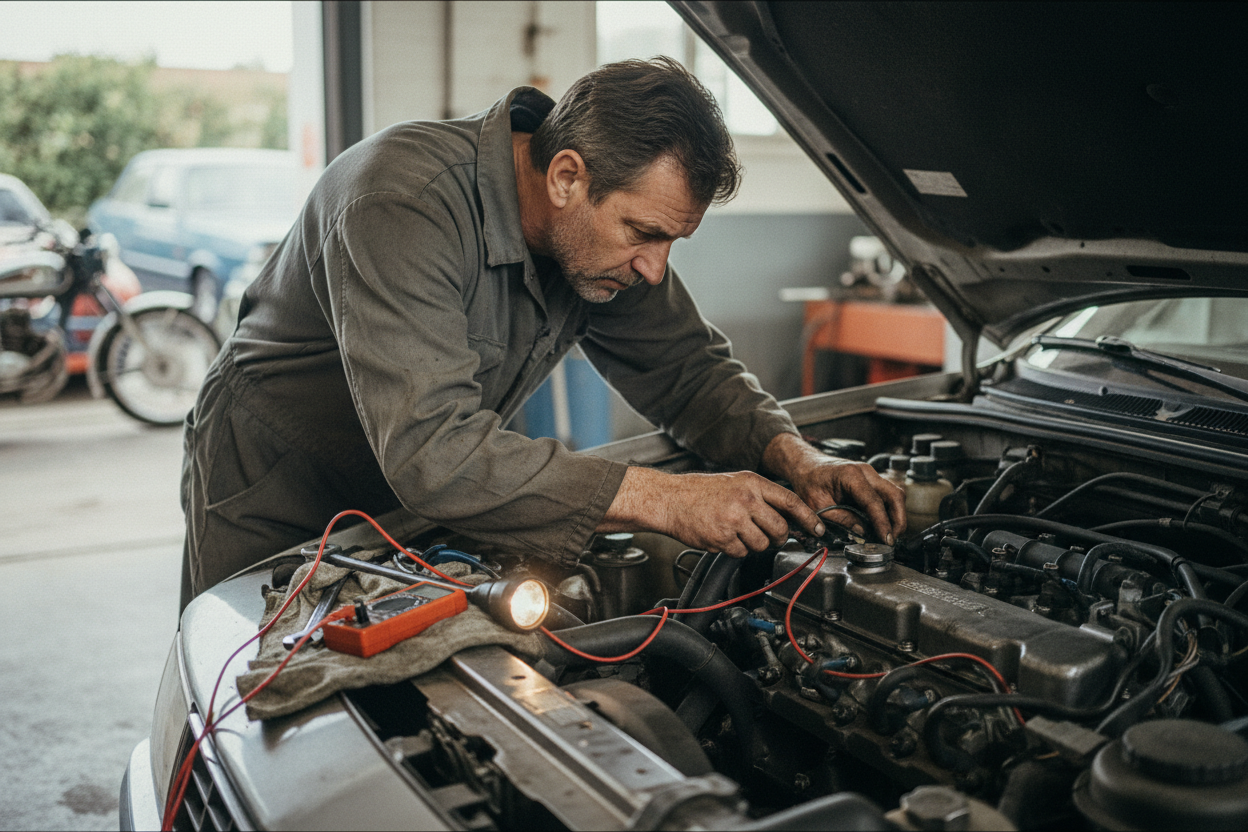
Electrical Checks First — Most motor failures trace back to power quality and connections. Verify line voltage at the motor under load; a healthy motor needs adequate voltage with minimal voltage drop. Inspect lugs for looseness or overheating, as high resistance joints create imbalance and heat. On three-phase units, confirm phase presence, rotation, and tight current balance using a clamp meter; a missing phase or poor balance amplifies heating and slashes torque. Evaluate protection: are overload relays properly sized and set, and are short-circuit devices coordinated? For single-phase motors, test the start/run capacitor and switching device; a hum without rotation usually flags a failed start circuit. Compare winding resistance between phases for uniformity and test insulation resistance with an insulation tester, trending values over time. Inspect contactors for pitted tips and ensure the coil receives stable control voltage. If a drive is present, check parameters, output frequency, carrier-related heating, and proper filtering. Document every measurement to guide the next decision.
Mechanical Health Matters — Electrical soundness cannot rescue poor mechanics. Assess bearings first: listen for growl, feel for roughness, and compare end-bell temperatures. Both under-lubrication and over-lubrication can fail bearings; use correct grease, quantity, and purge practices. Check alignment with laser or precise straightedge and correct soft foot with proper shimming; misalignment shows up as elevated vibration and premature seal wear. Inspect couplings for wear and backlash, and verify belt tension and sheave alignment on belt-driven systems. Examine the base for looseness or resonance and look for cracked mounts. Rotate the shaft to sense axial and radial play; excessive movement hints at bearing or housing damage. Evaluate the driven load: pump cavitation, valve blockage, or gearbox binding can mimic motor faults. If symptoms vary strongly with load, consider unbalance, bent shaft, or rotor issues. A clean, square, tight mechanical setup reduces current draw, heat, and noise while restoring reliable performance.
Heat, Environment, and Duty — Overheating is both a symptom and a cause. Verify cooling airflow: clear fins, intact fan blades, and unobstructed guards. Dust, oil, and process debris form insulating blankets that trap heat. Consider ambient temperature, altitude, and enclosure type; an ODP motor in a dirty, humid area invites contamination, while a TEFC needs exterior fin cleanliness to shed heat. Match duty cycle and starts-per-hour to the application; frequent starts create intense thermal stress and accelerate insulation and bearing wear. Under variable-speed operation, steep dv/dt and high switching rates add heating and stress to windings; appropriate output filtering and proper cabling mitigate risk. Moisture drives down insulation resistance, so address wicking, seals, and space heating for idle equipment. Correlate current vs nameplate FLA with observed temperature rise using a clamp meter and thermal imaging. Ensure overload protection and enclosure integrity align with the environment so the motor can breathe, cool, and endure.
Prevent, Document, Decide — Pro-level reliability comes from prevention and disciplined records. Create baselines for voltage, current, vibration, insulation resistance, and bearing temperature, then trend them to catch drift early. Standardize lubrication intervals, grease type, and quantities; install relief paths to avoid overpacking. After any intervention, re-check alignment, soft foot, and terminal torque with calibrated tools. Keep a lightweight checklist covering supply verification, protection settings, rotation, cooling, and load status. Label terminals, phase rotation, and rotation arrows to speed future work. For failures, practice root-cause analysis and capture photos, readings, and conclusions. Decide to rewind or replace by considering efficiency impact, frame and core condition, lead time, and system criticality; maintain a strategic spare if uptime is vital. Leverage predictive tools—basic vibration pens, ultrasound, or current signature analysis—to extend intervals between surprises. A consistent process transforms motor troubleshooting from firefighting into reliable, repeatable results.