Troubleshooting Motor Noise and Vibration
Learn how to diagnose and fix motor noise and vibration - identify imbalance, misalignment, looseness, bearing wear, and electrical causes with proven tests.
Initial Assessment: Motor noise and vibration can point to a spectrum of conditions in motors, from harmless aerodynamic hiss to emerging component failures. Begin by establishing a baseline under normal load and speed, then compare any abnormal signatures. Use your senses deliberately: listen for tonal hums, rattles, or grinding; feel for imbalance or pulsing at the housing; and observe the mounting and connected equipment. Document operating states, including load, speed, and ambient influences such as temperature and airflow. Simple instruments like a vibration meter or smartphone app can help trend changes, but calibrated tools provide better confidence. Inspect the foundation, anchors, and guards, which can resonate or loosen over time. Note whether the noise appears during startup, steady operation, or rundown, as timing narrows likely causes. Verify power supply quality and ensure the motor is not being subjected to fluctuating input or process upsets. A disciplined first pass prevents guesswork, keeps focus on high-probability issues, and sets the stage for targeted corrective action.
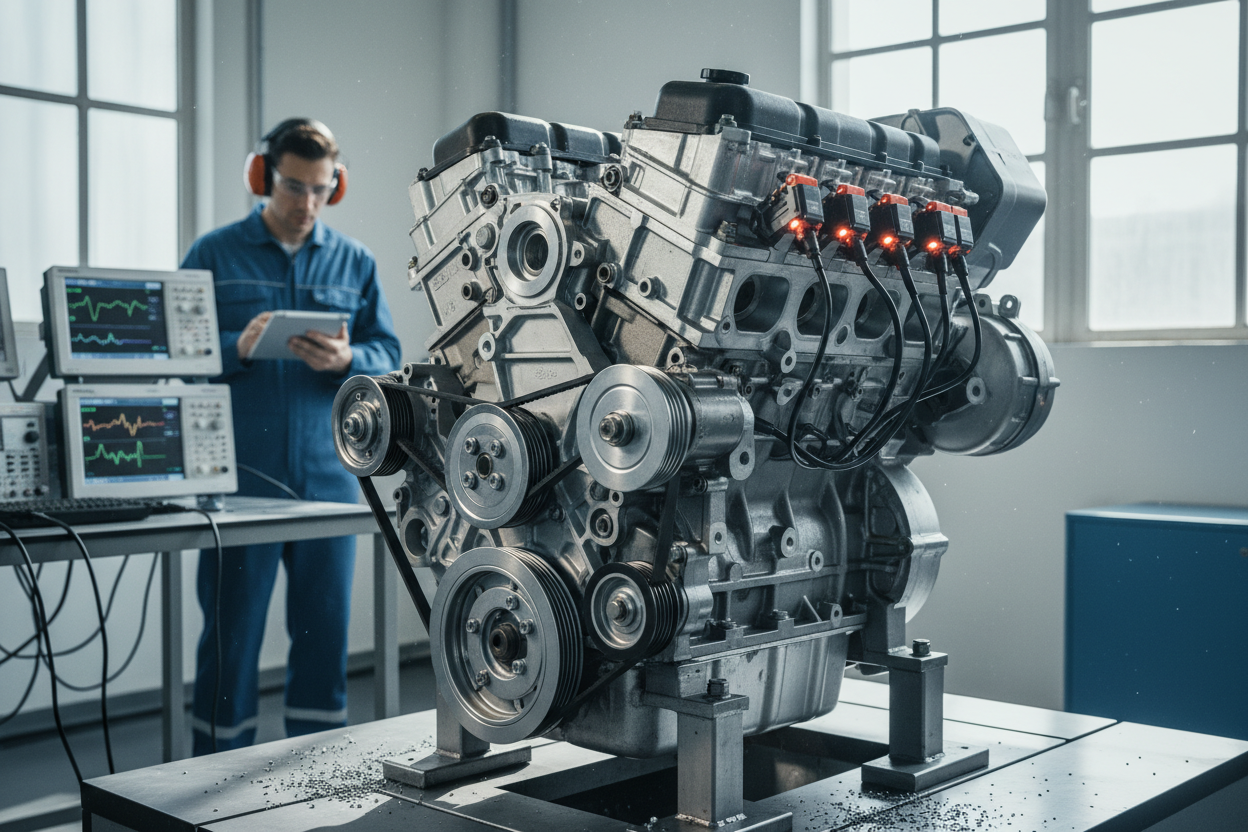
Mechanical Causes and Fixes: Many persistent noises stem from mechanical issues. Start with imbalance from uneven mass distribution on rotors, fans, or couplings; this often produces a steady, speed-related vibration. Correct by precision balancing and verifying that fan blades, keys, and pulleys are secure. Misalignment between motor and driven equipment can generate axial or radial vibration, heat, and coupling wear. Use dial indicators or laser tools to achieve tight alignment tolerances, and confirm soft foot is corrected with proper shimming. Check bearing condition for roughness, looseness, or lubrication failure; a dry or contaminated bearing can sing, rumble, or chatter. Inspect belt tension and sheave condition to eliminate belt flutter and gear mesh noise. Ensure all fasteners meet torque specs and the base is flat and stiff to avoid structural resonance. Adding or adjusting isolation pads can decouple the motor from a flexible frame that amplifies otherwise minor vibrations.
Electrical and Magnetic Factors: Not all noise is mechanical; electrical and magnetic phenomena can drive audible tones and structural vibration. Voltage unbalance, harmonics, or phase loss can load windings unevenly, increasing vibration and heating. Use a power-quality analyzer to check for distortion, unbalance, and transients. With VFD control, PWM switching can introduce acoustic whine and shaft currents. Optimize carrier frequency, apply dv/dt or EMI filters, and verify proper grounding and cable shielding. Watch for stator eccentricity, rotor bar defects, and magnetic pull that can produce line-frequency hums or beat notes at specific speeds. Excessive slip compensation or aggressive torque limits can excite drivetrain resonance. If bearing currents are suspected, consider insulated bearings, conductive brushes, or shaft grounding rings. Confirm that nameplate parameters are correctly programmed so the drive does not overexcite the motor. A combined electrical and mechanical perspective ensures that corrective actions address root causes rather than symptoms.
Operational and Environmental Influences: Motors rarely operate in isolation; the system shapes what you hear and feel. Variable load cycles, frequent starts, and long coast-downs can amplify transient noise. Thermal expansion changes alignment and bearing clearances, so verify noise at both cold and stabilized temperatures. Review lubrication practices—wrong grease type, contamination, or overfilling can trigger churning, heat, and bearing distress. Check for airflow obstructions, clogged filters, or blocked fan inlets that alter cooling and produce tonal hiss. The enclosure type and location matter: reflective walls, ducts, or nearby machinery can create acoustic coupling and echo, complicating diagnosis. Assess base stiffness and the possibility of pipe strain or conduit stress pulling the frame. If the motor is misapplied—oversized, undersized, or mismatched to the driven load—expect operation in inefficient zones where vibration is more likely. Sometimes the lowest-cost fix is system-level: modify process setpoints, add isolation, or tune control loops to avoid resonant operating points.
Systematic Troubleshooting Workflow: A repeatable workflow turns ad hoc reactions into reliable results. Start with safety, then define the complaint in measurable terms—noise level, dominant frequency, or displacement. Collect data: overall vibration, spectrum via FFT, current and voltage waveforms, temperature, and speed. Match fault frequencies—1x running speed suggests imbalance, sidebands can indicate misalignment or looseness, high-frequency peaks may reflect bearing defects, and prominent electrical line components point to power issues. Form hypotheses, test one change at a time, and log outcomes. Apply corrective actions—rebalance, realign, tighten, lubricate, filter, or retune VFD parameters—then verify improvements against the baseline. Close with root cause analysis and update maintenance plans, including lubrication intervals, alignment checks, and power-quality reviews. Set acceptance criteria and escalations, and train operators to report early anomalies. A disciplined loop of measure, act, and confirm keeps motors quiet, efficient, and dependable.